

As economic uncertainty continues to shape the global job market, many professionals are rethinking their career choices. Layoffs, automation, and industry slowdowns have made one thing clear: job stability matters more than ever. In this landscape, medical billing stands out as one of the most recession-proof careers in 2026.
Healthcare doesn’t pause during economic downturns—and neither does the need for accurate medical billing. Below are five compelling reasons why medical billing remains a stable, high-demand career choice, even in uncertain economic times.
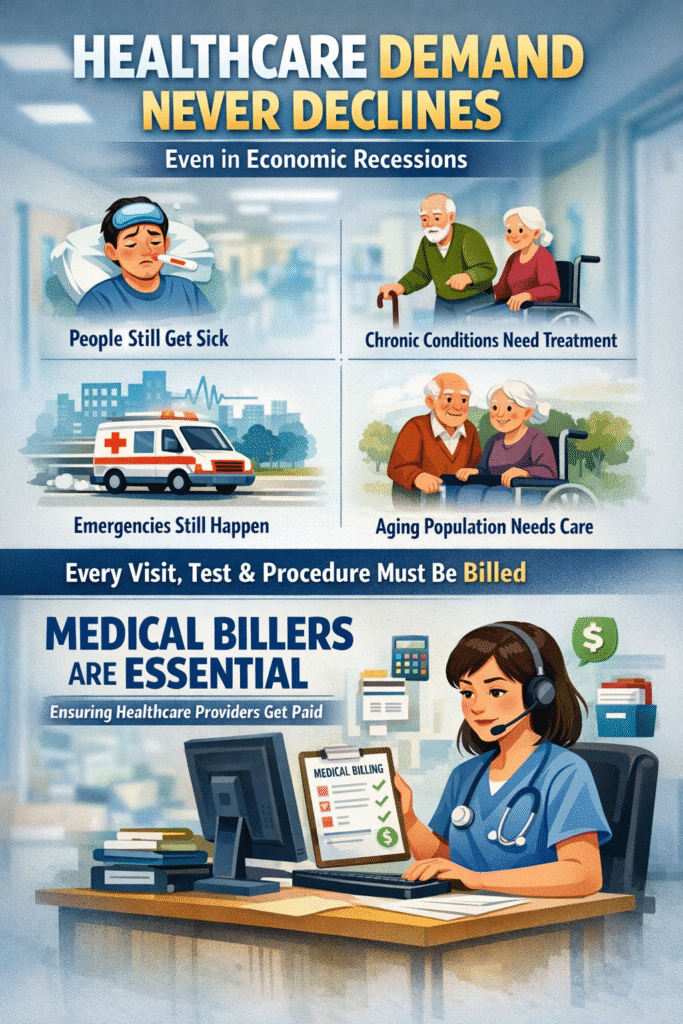
1. Healthcare Demand Never Declines—Even in Recessions
One of the biggest reasons medical billing is recession-proof is simple: people always need healthcare.
Regardless of economic conditions:
People still get sick
Chronic conditions still require treatment
Emergencies still happen
Aging populations need ongoing medical careEvery doctor visit, hospital stay, diagnostic test, or procedure must be billed correctly. Medical billers play a critical role in ensuring healthcare providers get paid, making them essential workers behind the scenes.
2. Medical Billers Are Essential to Healthcare Revenue
Medical billing is not optional—it is the financial backbone of healthcare facilities.
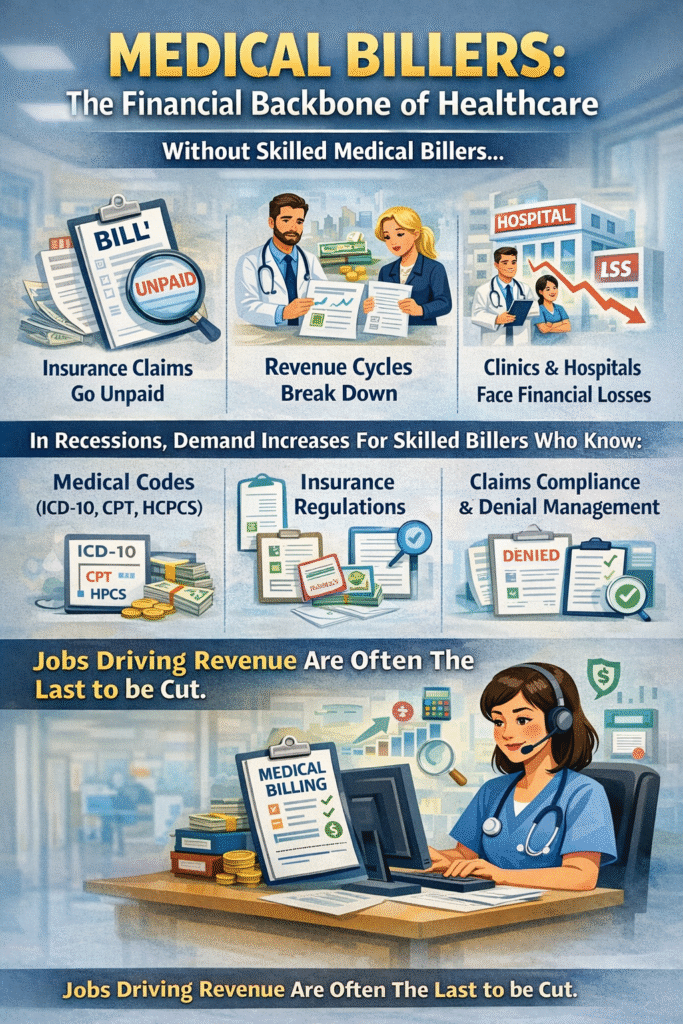
Without skilled medical billers:
Insurance claims go unpaid
Revenue cycles break down
Clinics and hospitals face financial losses
Healthcare operations slow or shut down
In a recession, healthcare organizations become even more focused on accurate billing and faster reimbursements. This increases the demand for trained professionals who understand:
Medical codes (ICD-10, CPT, HCPCS)
Insurance regulations
Claims compliance and denial management
Why this matters: Jobs tied directly to revenue generation are usually the last to be cut during economic downturns.
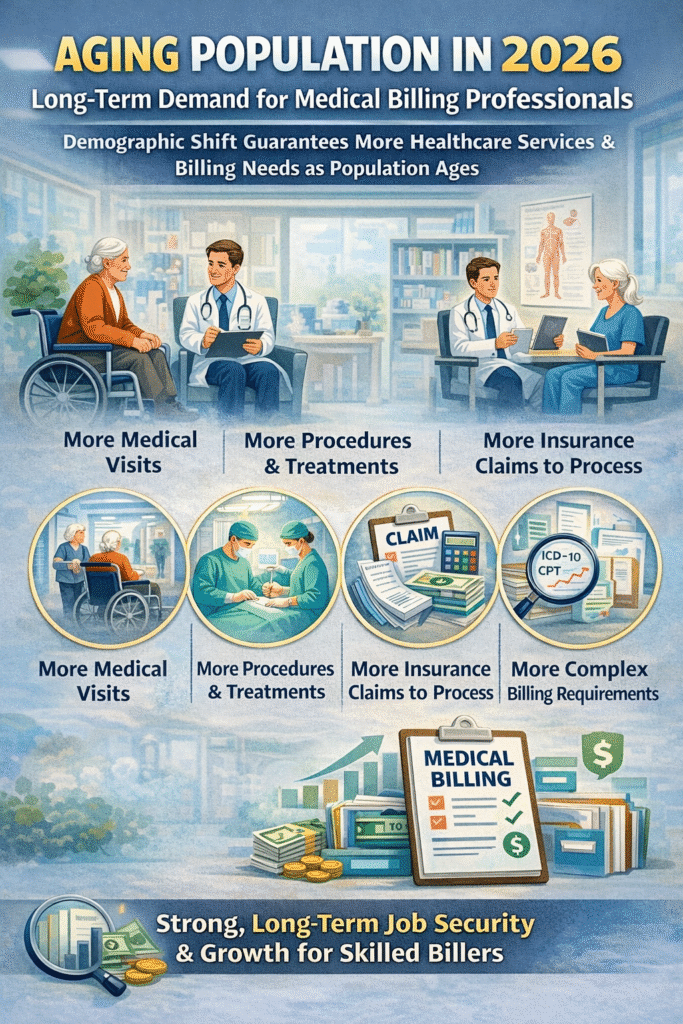
3. Growing Aging Population Fuels Long-Term Job Security
By 2026, the global population—especially in countries like the U.S., Canada, and parts of Europe—will be significantly older.
An aging population means:
More medical visits
More procedures and treatments
More insurance claims to process
More complex billing requirements
This demographic shift guarantees long-term demand for medical billing professionals. As healthcare services expand, so does the need for skilled billers who can handle increasing claim volumes and regulatory changes.
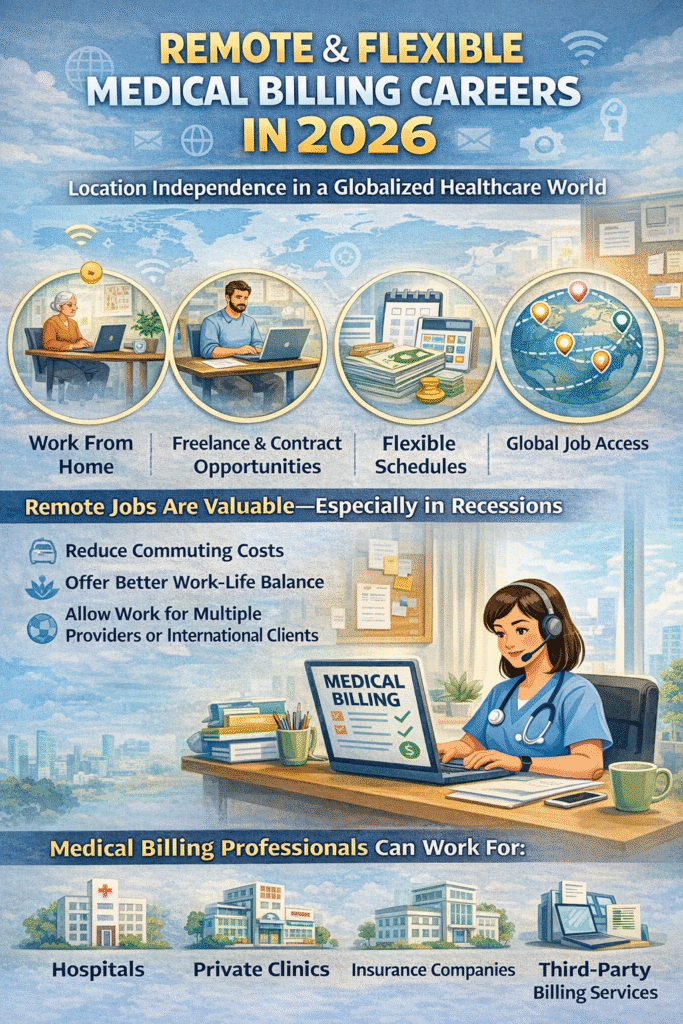
4. Medical Billing Offers Remote & Flexible Work Opportunities
Another major advantage of medical billing in 2026 is location independence.
Many medical billing roles offer:
Remote or work-from-home options
Freelance or contract opportunities
Flexible schedules
Global job access
During recessions, remote jobs are especially valuable because they:
Reduce commuting costs
Offer better work-life balance
Allow professionals to work for multiple providers or international clients
Medical billing professionals can work for:
Hospitals
Private clinics
Insurance companies
Third-party billing services
5. Low Entry Barrier with High Growth Potential
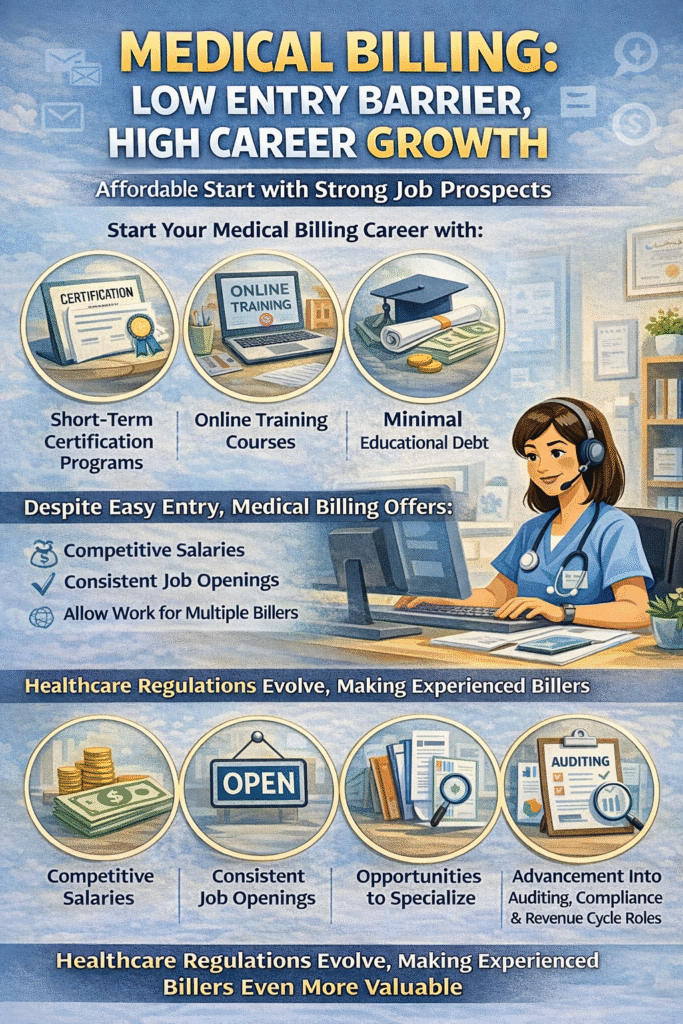
Unlike many recession-resistant careers that require years of education, medical billing has a low barrier to entry.
You can start a medical billing career with:
-
Short-term certification programs
-
Online training courses
-
Minimal educational debt
Despite this, the career offers:
-
Competitive salaries
-
Consistent job openings
-
Opportunities to specialize
-
Advancement into auditing, compliance, or revenue cycle management roles
As healthcare regulations evolve, experienced medical billers become even more valuable, creating steady career growth despite economic challenges.
Ready to start a career in billing? Join our medical billing course in Hyderabad at UniQode Tech, KPHB.


